
How to Choose the Right Aluminum Extrusion Profile
A practical guide to choosing between PG20, PG30, PG40, PG45, PG50, and PG60 profiles, with clear rules for span, slot type, deflection, and when to size up.
What are PG groups and slot types?
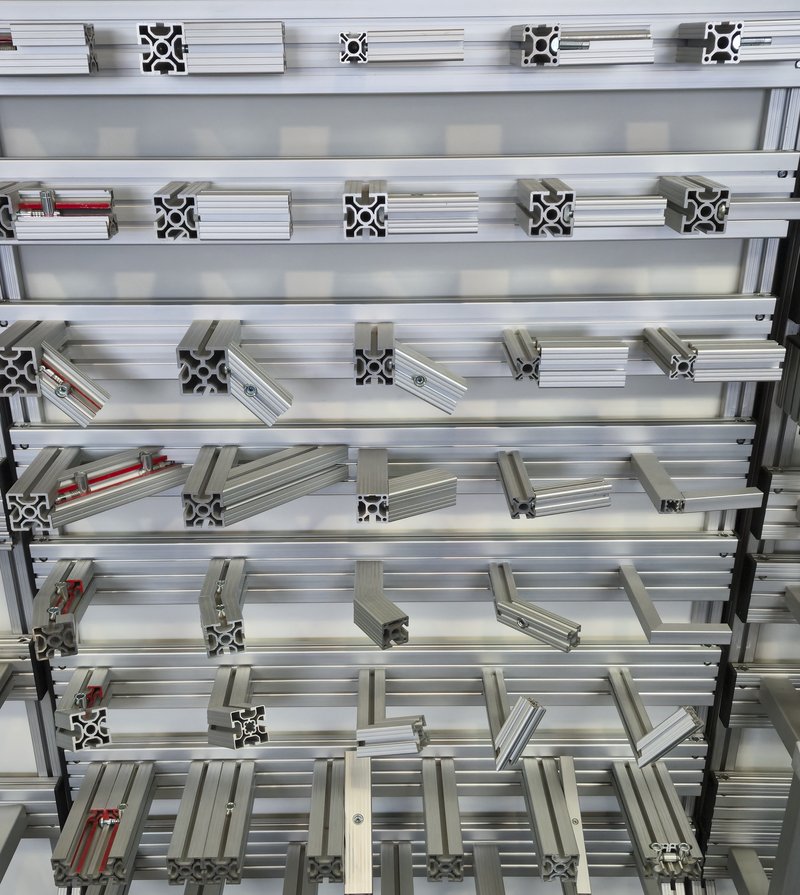
MayTec sorts profiles into seven profile groups (PG) based on their basic outer dimensional units (16mm, 20mm, 30mm, etc.). Each group contains multiple outer dimensions that are a multiple of the original basic units, from 40x40 to 40x80 to 80x80 and so on. MayTec also distinguishes profiles by slot type: E slot, F slot, and H slot. The slot shape determines which components are compatible, like connectors, panels, and other accessories. Most profiles within any PG group share the same slot type.
| Group | Common Slot | Cross Sections |
|---|---|---|
| PG16 | HH-Slot |  |
| PG20 | HH-Slot |  |
| PG30 | FF-Slot |  |
| PG40 | EE-Slot | 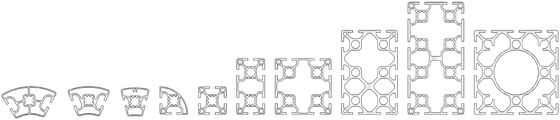 |
| PG45 | EE-Slot |  |
| PG50 | EE-Slot | 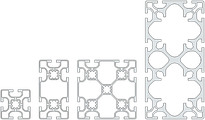 |
| PG60 | EE-Slot |  |
The fast answer
PG40
Best defaultThe go to profile for machine frames, workbenches, guarding, carts, and most industrial builds. The most well rounded category in the lineup. Start here if you are not sure.
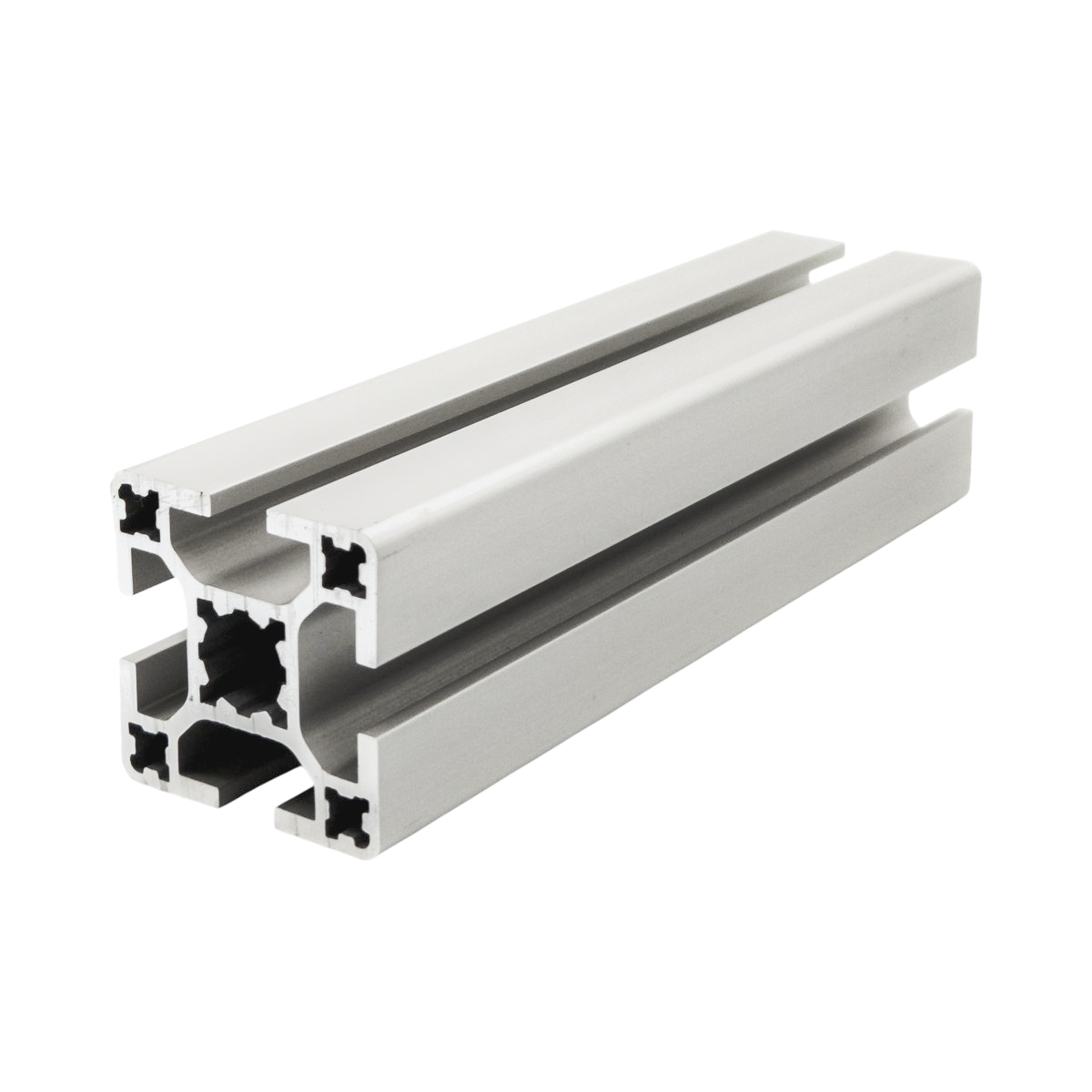
Light to medium duty builds where a cleaner look matters. Great for displays, lighter enclosures, and frames where you want something presentable without the cost of PG40.
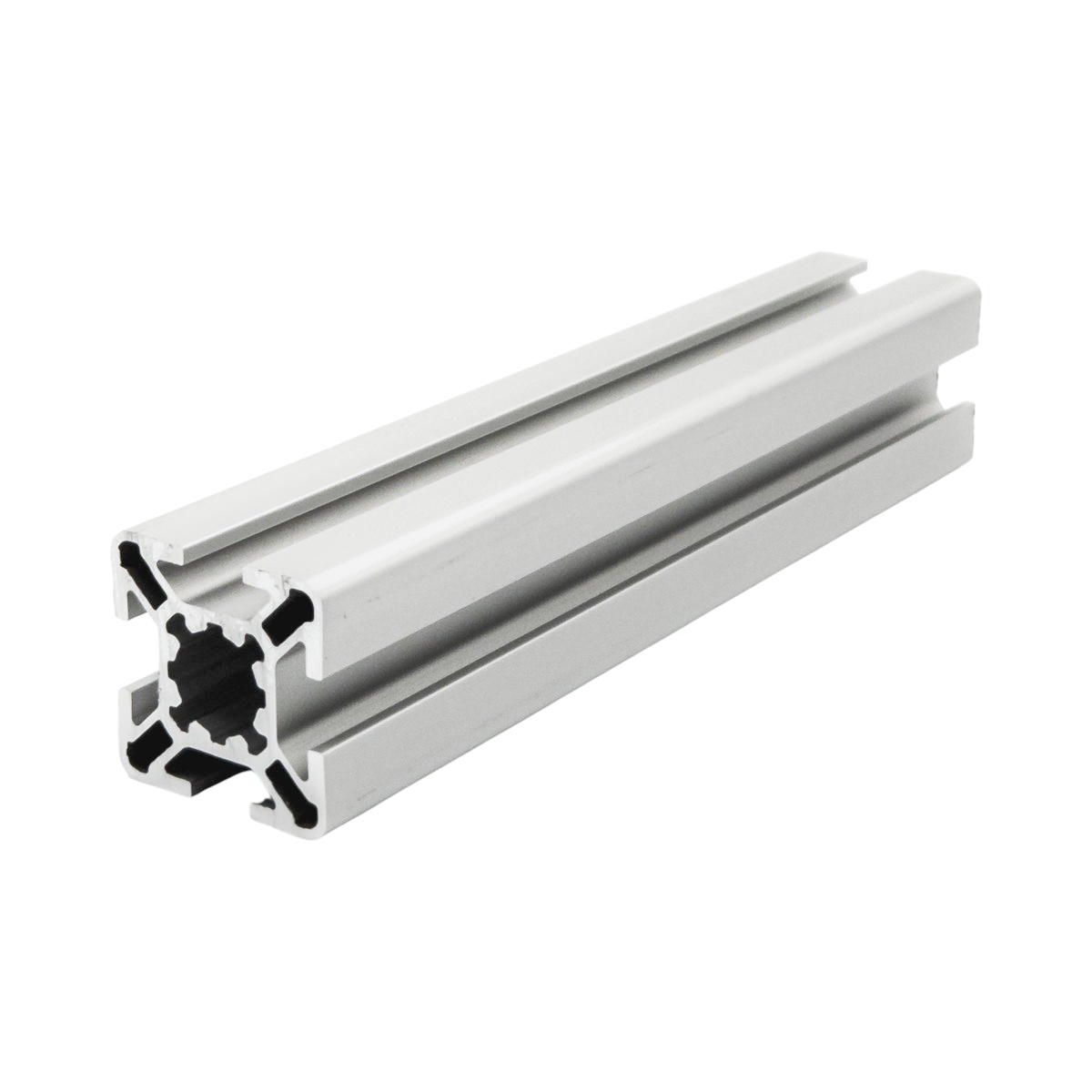
Very light duty applications only. Great for compact frames, sensor mounts, and small builds where keeping cost and size down matters most.
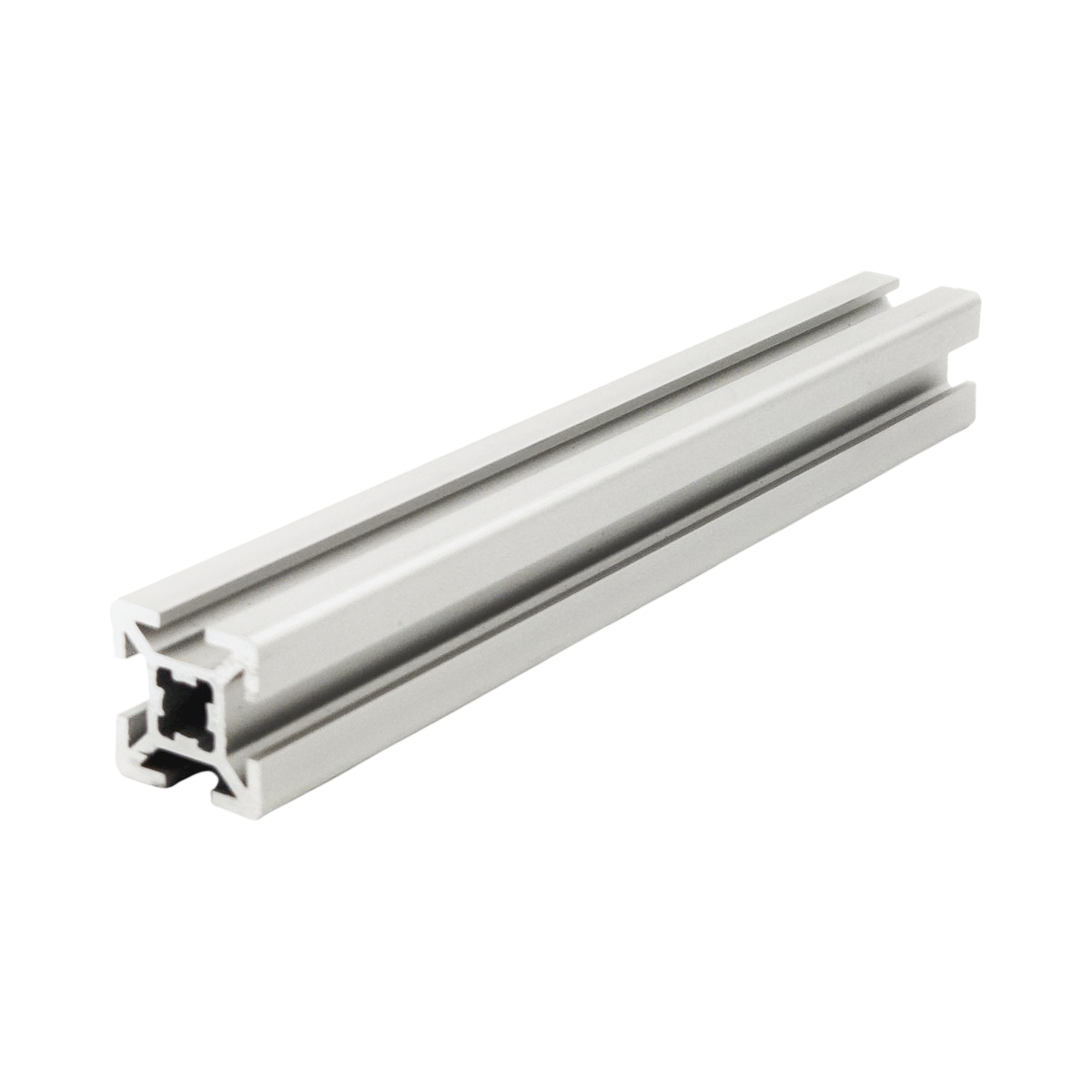
Heavy load bearing and structural applications. Excellent for long spans, vibration control, and frames carrying expensive equipment where rigidity is critical.
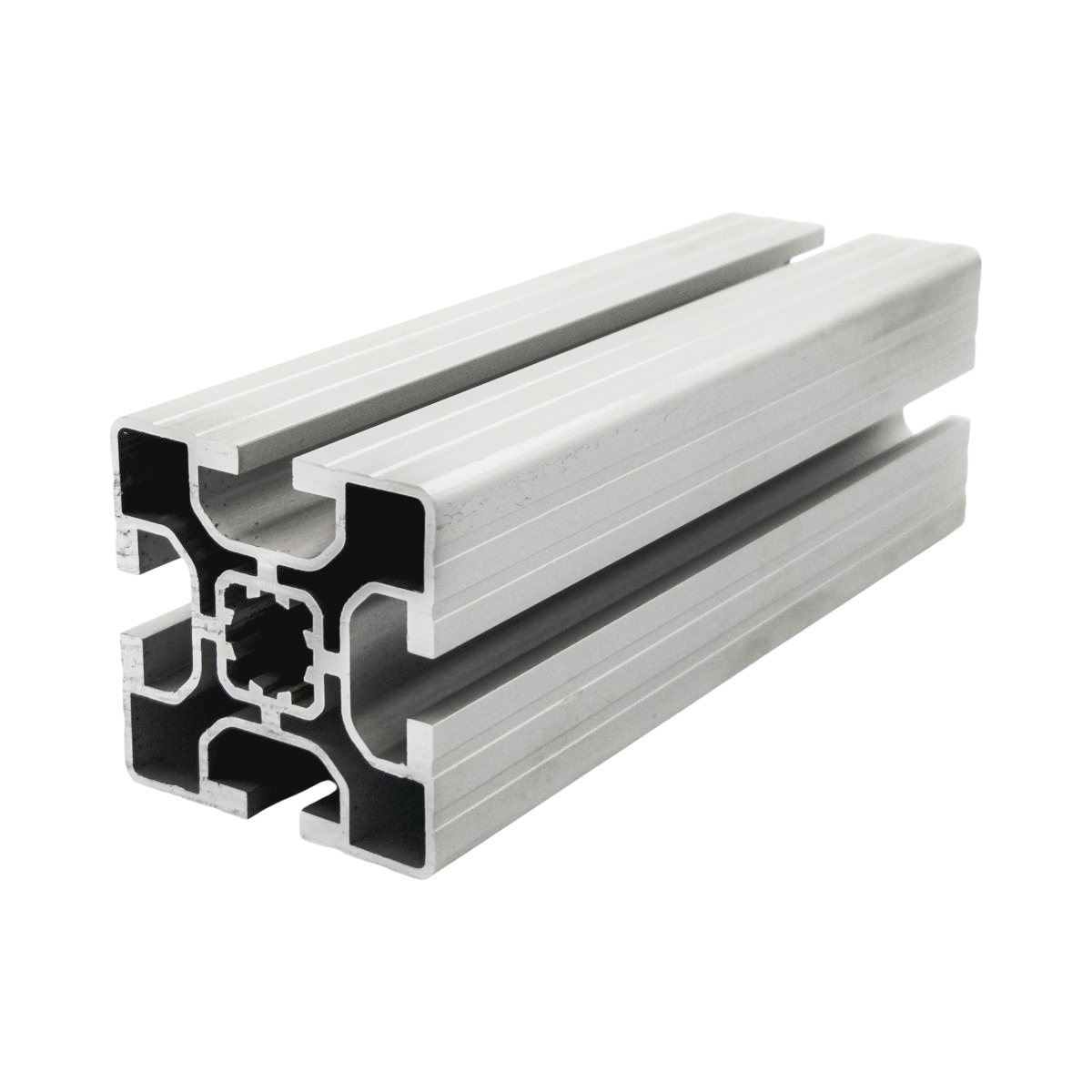
Choose E-slot when versatility, panel retention, and connector compatibility matter most. All slotted profiles are the default choice for most builds. You can switch to smooth face variants when you are confident you will not need those open slots for future accessories, panels, or modifications.
Match the profile to the application first
Before you look at any numbers, start with what the frame is actually doing. A display booth and a machine base might handle similar static loads on paper, but the real world demands on each are very different, and they will need very different profiles as a result.
Once you know the application, you can start narrowing it down by load, span, slot type, and how the finished product needs to look.
Common starting points by application
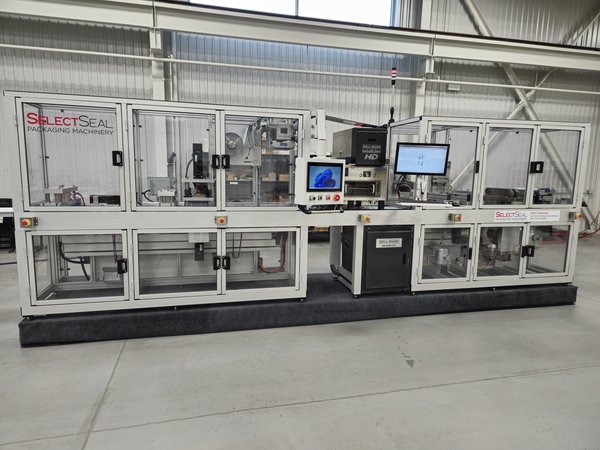
Machine frames and guarding
E-slot gives the deepest panel retention and the broadest connector ecosystem. Most machine frames and safety guarding start here.
Spans exceed 1000 mm under load or the frame carries heavy automation equipment.
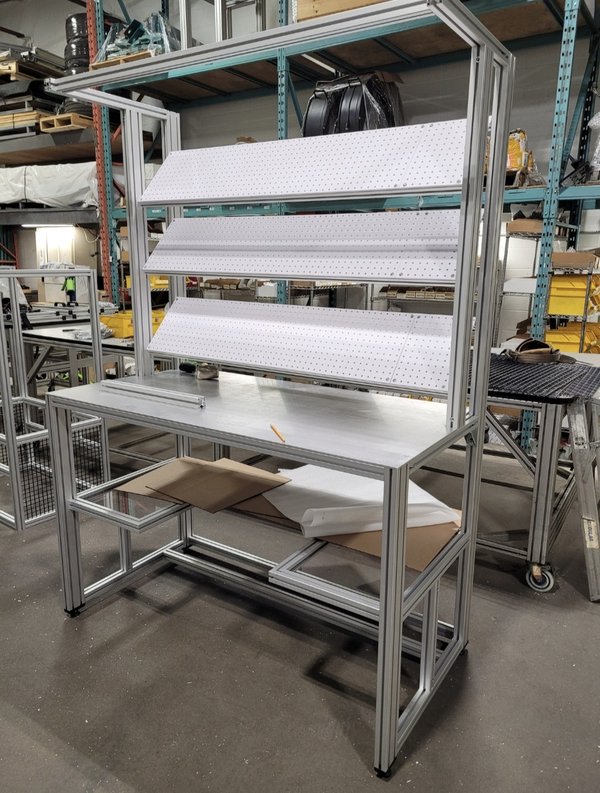
Workbenches and workstations
A workbench needs to feel planted in daily use. PG40 provides enough mass and stiffness to control vibration and support accessories.
The work surface needs to carry heavy tooling or the bench includes long unsupported shelves.
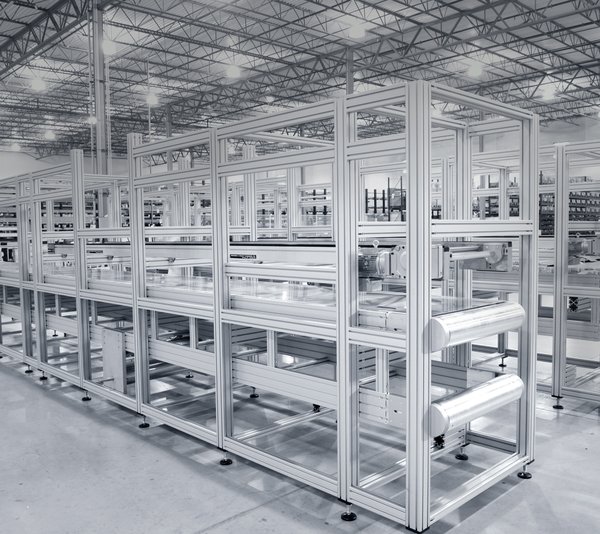
Conveyors and material handling
Conveyor supports are governed by rigidity, support spacing, and leveling. PG40 is the safer default, while PG30 works for lighter runs.
The run is long, the payload is heavy, or the floor conditions make leveling difficult.
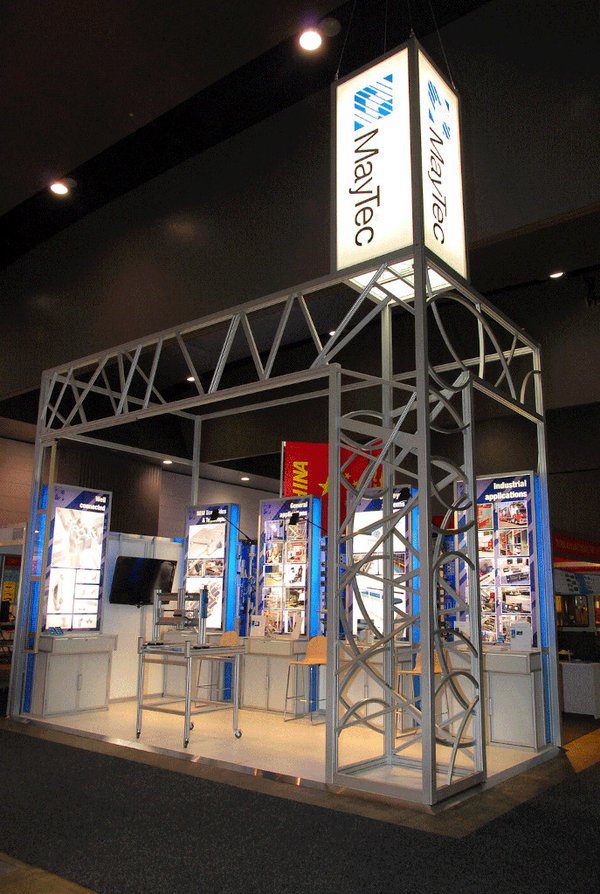
Displays and trade show builds
Appearance and transport matter more than structural reserve. PG30 gives a cleaner look with enough stiffness for most displays.
The structure needs to carry large signage panels or stand on uneven ground.
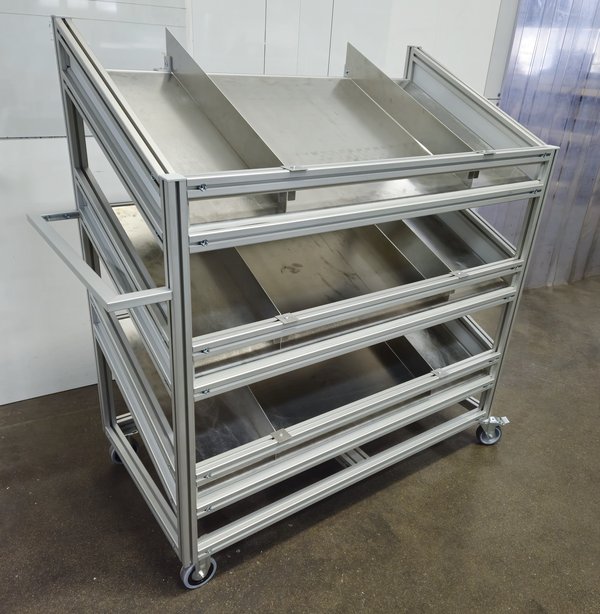
Carts and mobile equipment
Carts take more abuse than static frames. Between caster impact, uneven loading, and people pushing them into things, you need a profile that can handle forces from multiple directions. PG40 gives you that reserve.
The shelves will carry heavy loads, the cart will roll on rough or uneven floors, or you need a stronger caster mounting plate.
The MayTec profile families
These five families cover most first-pass decisions. Start with the application, then use span, slot type, and future flexibility to confirm the right series.
20x20 4H Light
H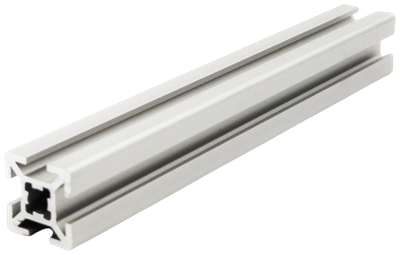
Compact light duty brackets, sensors, small frames
Browse PG20 profiles →30x30 4F Light
F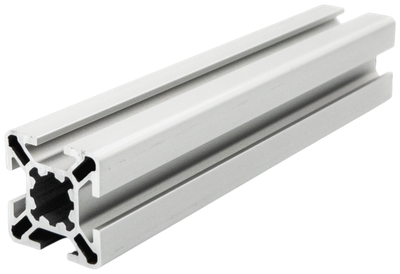
Lighter enclosures, displays, clean looking builds
Browse PG30 profiles →40x40 4E Light
E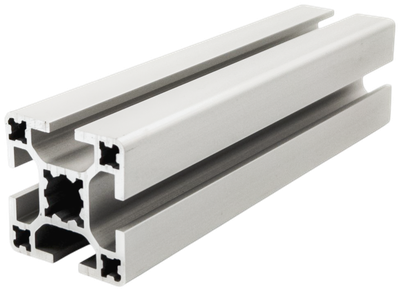
Machine frames, guarding, benches, carts, conveyors
Browse PG40 profiles →For heavier applications, PG50 and PG60 provide even more stiffness for long spans and high loads.
Use span and deflection to decide when to size up
Many profile mistakes do not show up as failure. They show up as flex, vibration, or poor alignment.
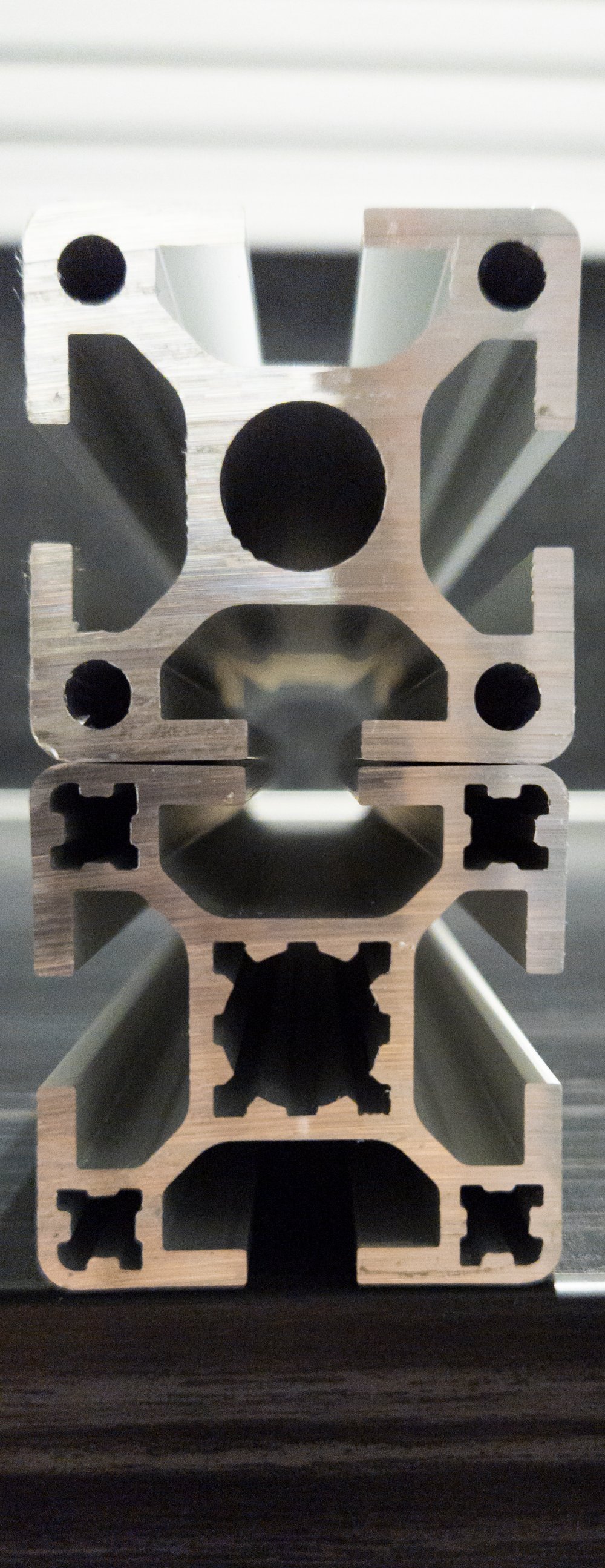
The two main factors are unsupported span and profile geometry. A longer span increases deflection quickly, and a 40x80 6E Light is about 6.8 times stiffer than a 40x40 4E Light on its strong axis. Even the same 40x80 is about 3.7 times stiffer standing tall than laid flat. In many cases, adding a support makes more sense than jumping to a larger profile.
That is when the deflection calculator matters. Once you get past about 1000 mm of unsupported span under real load, check it instead of guessing.
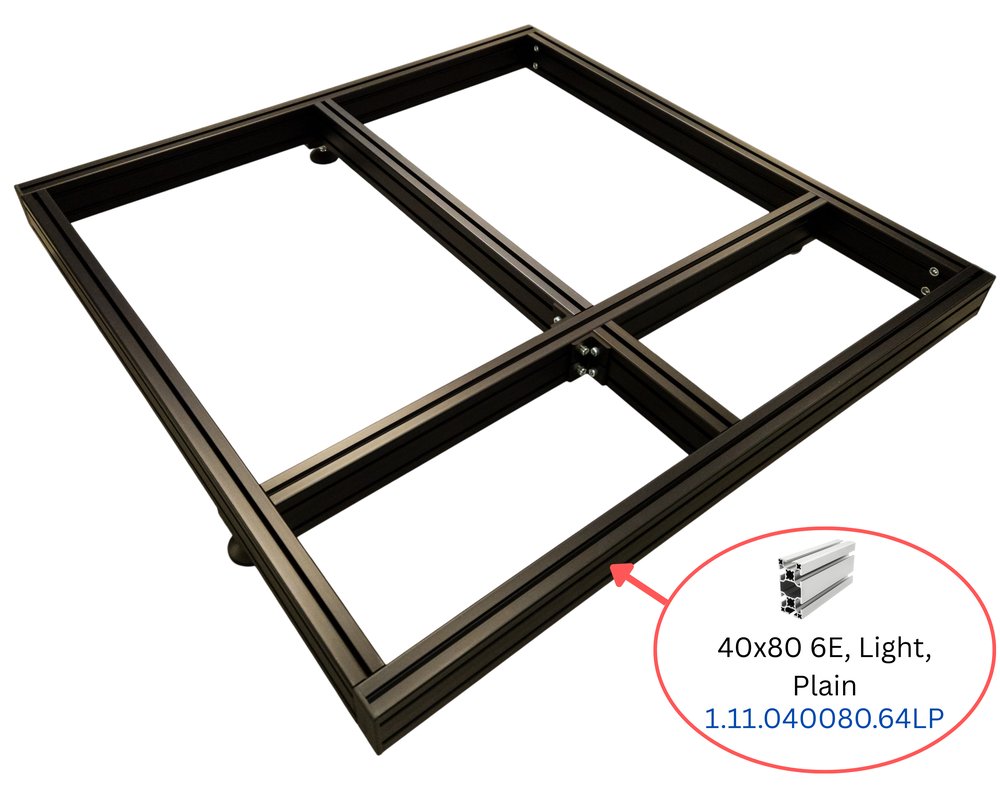
Check your span before you commit
Select a profile, enter span length and load, and see deflection in both axes. Compare multiple profiles side by side.
E-slot, F-slot, and H-slot at a glance
The slot shape changes what hardware fits, how secure panels feel, and how much room you have for future add-ons.
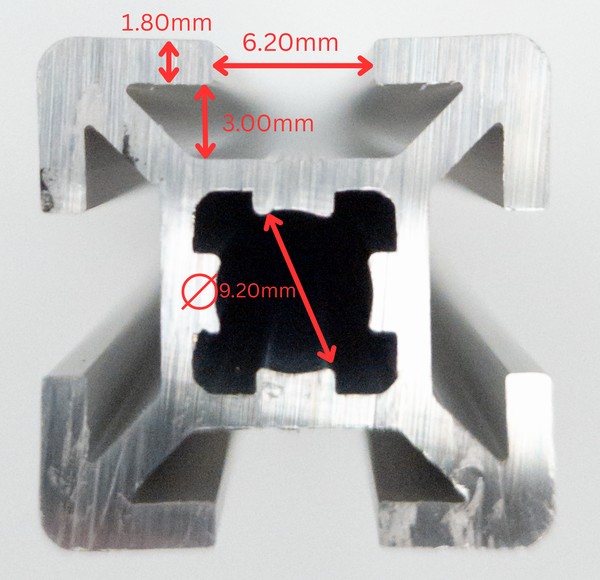
Compact assemblies and light duty frames where size and cost matter most.
A cost effective option for low load applications where you want a small, efficient profile that still does the job.
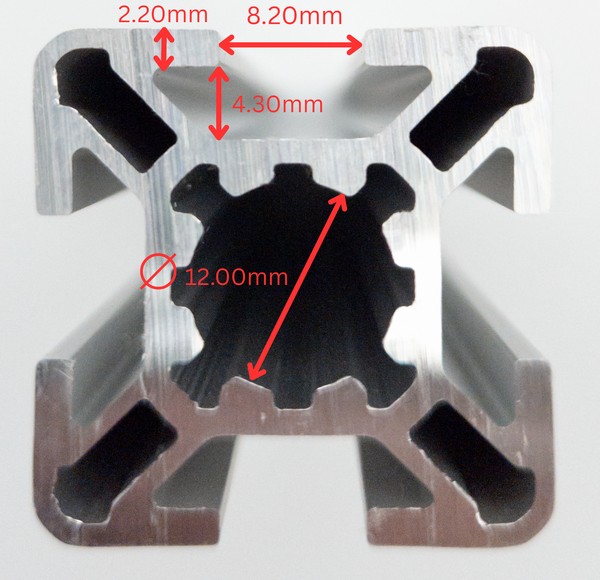
Lighter enclosures, display frames, and medium duty structures.
A good middle ground slot type and profile family when PG20 is too small and PG40 is more than the job needs.
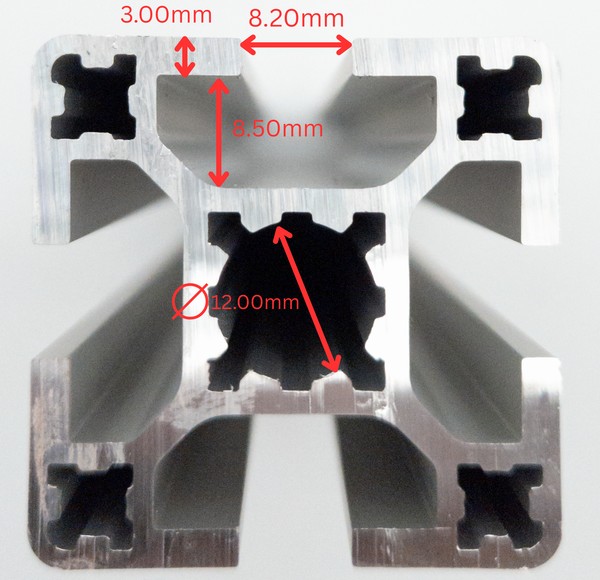
Machine frames, benches, conveyors, and projects that may evolve over time.
E-slot provides the deepest T-slot depth, which allows for the strongest panel retention.
If mesh, polycarbonate, doors, or guarding components are part of the job, check slot compatibility early. In real projects, panel and hardware requirements often drive the profile decision as much as load does.
Panel pushout test: E slot vs F slot vs H slot
Real pushout force test on mesh panels seated in E, F, and H slot profiles. E slot provides the deepest groove and strongest panel retention, which is why it is the standard for machine guarding and safety barriers.
Balance strength, flexibility, appearance, and cost
Strength is only part of the decision. A profile can be structurally right and still be the wrong choice for the build.
A profile with more open slots is easier to modify later. That matters if you expect to add shelves, cable management, panels, sensors, or other accessories after the first build.
A profile with more smooth faces can make sense when appearance matters more, especially on customer facing equipment, displays, or cleaner looking builds. The tradeoff is that every closed face gives up some flexibility later.
When more strength or stiffness is needed, the best answer is not always a bigger profile. In many cases, adding a few well placed supports is more effective and more cost efficient than upsizing every loaded member.
Do not oversize everything. Usually only a few loaded members need the heavier section, while the rest of the frame can stay lighter or cleaner.
Common mistakes to avoid
Do not choose PG20 just because it is the smallest and cheapest if the frame has real structural duty.
Do not size a frame by load alone and ignore unsupported span.
Do not choose a smooth face profile before thinking about what you may want to bolt on later.
Do not assume every member needs to be oversized. Put strength where the load path demands it.
Do not pick slot type before checking panel, connector, and accessory compatibility.
Do not assume t-slot is always the right framing method. Sometimes a welded frame or another structure is the better answer.
When to call MAP instead of guessing
Bring us in early when the frame supports expensive equipment, includes long loaded spans, has guarding or panel retention requirements, or needs high rigidity with low vibration. Those are the jobs where connection method, profile orientation, and overall frame geometry matter as much as the profile family itself.
Frequently asked questions
What is the best aluminum extrusion profile for machine frames?+
PG40 with E-slot is the most common starting point for machine frames. It gives the best combination of structural capacity, connector compatibility, and panel retention. Size up to 40x80 or 80x80 for heavier loads or longer spans.
Is PG40 strong enough for a workbench?+
Yes. PG40 40x40 handles most workbench applications well. For heavier duty benches or benches with long unsupported shelves, step up to 40x80 in a favorable orientation or add more support posts.
When should I use PG30 instead of PG40?+
Use PG30 when the application is light to medium duty, aesthetics matter, and you want a lower cost frame without needing the full E-slot connector ecosystem. PG30 uses F-slot, which is slightly narrower.
Does slot type matter for panels and guarding?+
Yes, significantly. E-slot provides the deepest retention for mesh and polycarbonate panels. F-slot works for lighter panels but has less pushout resistance. H-slot is not recommended for guarding applications where panel security matters.
How do I know when to use the deflection calculator?+
Use it whenever you have an unsupported span over 1000 mm under meaningful load, or any time the frame carries expensive equipment or instruments. The calculator takes less than a minute and can prevent a costly sizing mistake.
Can I mix profile series in the same frame?+
Yes. Many real builds use different profile sizes for different members. The main structural members might use PG40 40x80 while upper accessories use PG30 30x30. The key is using appropriate connectors at the transitions.
Your next step
Know your application? Use the Profile Selector. Know your span and load? Use the Deflection Calculator. Balancing multiple tradeoffs? Contact MAP and we will help you compare the right options quickly.